



Table of Content
Most executives still picture SEO as a national game: thousands of keywords, broad reach, big budgets. For years, the assumption in B2B was that local search belonged to restaurants and plumbers and other storefront businesses, not to consultants or software vendors.
That assumption no longer holds.
Procurement teams and corporate buyers research vendors the same way they shop for anything else. Looking for a commercial law firm or a regional logistics partner or a local systems integrator? The search starts with a Google query tied to a location. A company that doesn’t show up in those regional results is simply handing the lead to a competitor who made themselves easier to find, whether or not that competitor does better work.
How B2B Buying Has Gone Regional
Cold calls, mailers, and trade show booths don’t bring in the leads they once did. Buyers research on their own first, and by the time they speak to a salesperson they’ve usually already decided.
Recent industry surveys put the self-directed portion of the B2B buying journey at about 70-80% before anyone contacts a vendor. A few years ago that figure was commonly cited at 60-70%. Part of the rise comes from buyers using AI tools along with search to shortlist vendors. Even a warm referral gets Googled before the phone is picked up.
Local intent has real weight. Buyers gravitate toward regional vendors for practical reasons:
-
 A local partner already understands state-level compliance and regional market quirks.
 -
Shared time zones make day-to-day communication and crisis response easier.
-
Direct access to an account manager, rather than a call center, builds trust faster.
Someone typing "IT managed service provider near me" isn't casually browsing. They have a budget, a timeline, and a real problem to solve. Local search is one piece of a bigger picture, too. If you're building out a full pipeline strategy rather than just local visibility, it's worth pairing this with a broader look at how to generate B2B leads using digital marketing.
How Local SEO Outperforms a National Campaign
Chasing broad national keywords usually means going up against enterprise budgets and directory sites that outrank almost everyone. Local SEO avoids that fight by focusing on searches that carry real commercial intent.
The leads are better qualified. Someone searching “what is enterprise cybersecurity” is often a student or researcher. Someone searching “cybersecurity compliance audit firm in Austin” needs to hire this quarter. The second group converts at a much higher rate.
Costs stay lower. Paid search isn’t cheap. Google Ads benchmarks for 2026 put average B2B cost-per-click in the $3-7 range industry-wide, and competitive terms in legal or enterprise software often run higher. LinkedIn Ads cost even more per click and remain a solid channel, but organic local rankings bring in leads without paying for every click (see why B2B LinkedIn Ads generate better results).
Sales cycles shorten as well. When a prospect finds a company through a local search and immediately sees real reviews, current service details, and up-to-date credentials, much of the usual skepticism is already gone before the first call. That makes the sales team’s job easier.
How to Build the Strategy
Local SEO for B2B company takes more than sticking a city name in the footer. Here's what actually moves the needle.
1. How to Optimize the Google Business Profile
For many buyers, this profile is the first real touchpoint with the company, so it's worth treating like a second homepage:
-
Pick categories that match the actual service (Corporate Lawyer, Industrial Equipment Supplier, Marketing Agency), not the closest generic option.
-
Keep the legal name, address, phone number, and website up to date.
-
Post updates: case studies, milestones, service changes.
-
Add real photos of the office, the team, and the work environment.
2. How to Research Geo-Targeted Keywords
Buyers search in fairly predictable tiers:
Keyword Tier | Focus | Example |
Primary Core Services | Main service + location | "B2B SEO agency in Chicago" |
Industry + Location | Niche service + market | "Healthcare IT support provider Seattle" |
Sub-Location / Regional | Surrounding metro areas or business districts | "Commercial waste management services North Jersey" |
3. How to Build Dedicated Location Pages
A single generic "Contact Us" page doesn't cut it for a company with multiple offices or service territories. Each key market deserves its own page, with content that's actually different from the others:
-
Local team members and their bios
-
Office address, phone number, and a map
-
Case studies from clients in that region
-
Service descriptions written for that market, not copy-pasted from another city
-
Reviews and testimonials from local clients
4. How to Handle Technical SEO and Schema
Search engines need to be able to read the geographic signal clearly:
-
Work location keywords naturally into title tags and meta descriptions.
-
Reflect location in header tags without forcing it.
-
Add LocalBusiness or Organization schema (JSON-LD) so search engines get an explicit read on the business name, address, hours, and service area.
5. How to Manage Reviews and Reputation
In B2B, reviews function like executive references. Buyers notice how many there are, how recent they are, and how a company responds to the bad ones.
-
Build review requests into the post-project workflow instead of asking sporadically.
-
Encourage clients to mention specific outcomes ("streamlined our supply chain logistics across Dallas") rather than generic praise.
-
Respond to every review, good or bad, professionally.
6. How to Build Local Links and Citation Consistency
Search engines gauge local authority partly by how connected a business is within its region:
-
Keep the business name, address, and phone number identical across every directory and listing. Inconsistencies quietly hurt rankings.
-
Earn backlinks the way any legitimate local business would: sponsor an industry event, partner with a trade association, write for a regional business journal, or work with a local university program.
How Mistakes Undo the Work
A few missteps show up often enough to call out:
-
Assuming a strong national ranking makes local optimization unnecessary. It doesn't guarantee a spot in the map pack for a nearby search.
-
Copy-pasting the same location page across a dozen cities and swapping the city name. Search engines treat this as duplicate content, and it reads as lazy to a real visitor too.
-
Ignoring mobile. Executives frequently research vendors from a phone between meetings, and a slow mobile site loses them fast.
-
Covering only the primary office location when the sales team actually serves a wider metro or tri-state area, leaving those markets open to competitors.
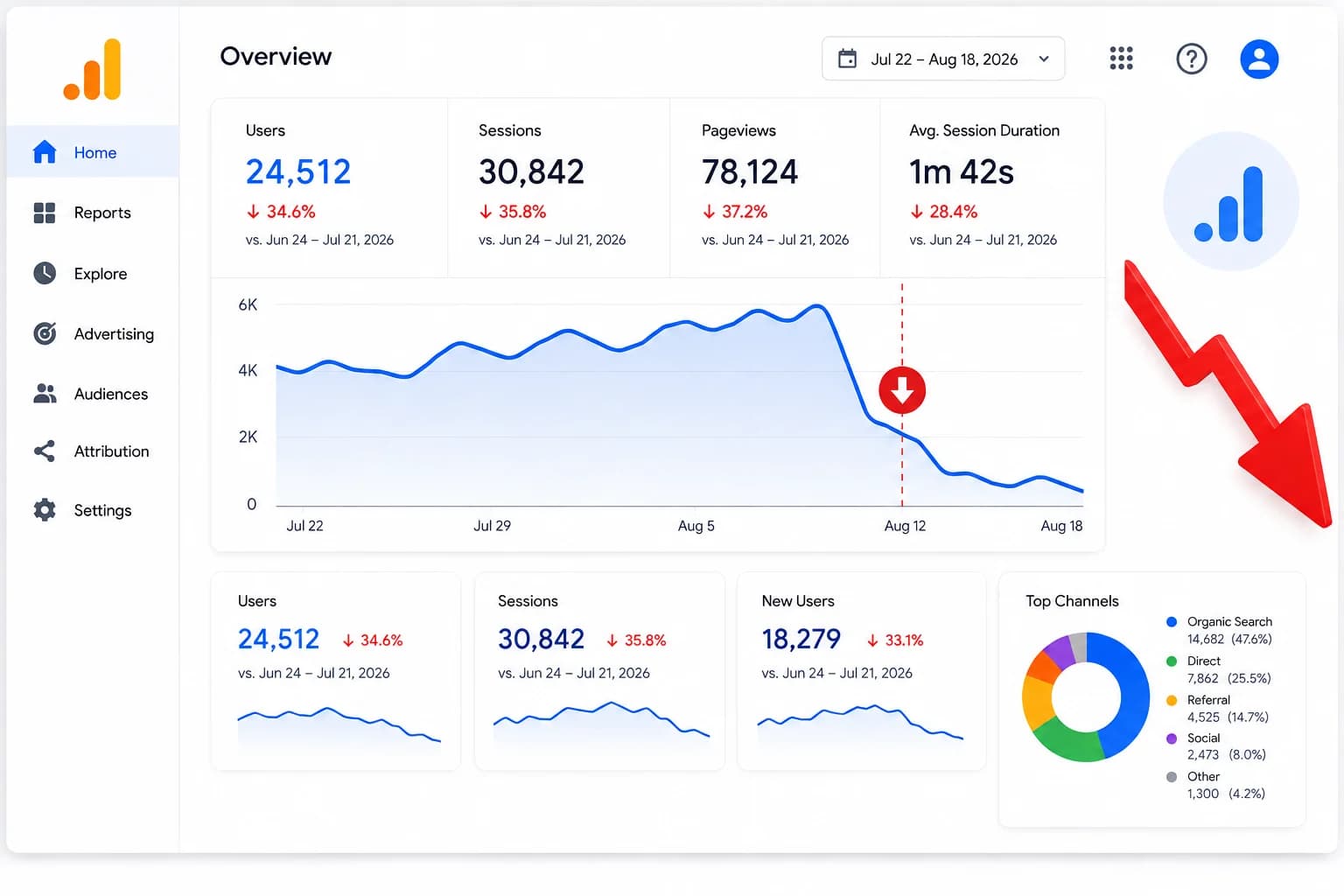
Local rankings can also slip for reasons that have nothing to do with local SEO strategy itself, like a broken tag or a stray noindex after a redesign. If your local pages suddenly lose visibility, it's worth ruling those out first; see why website traffic drops and how to recover it.
How to Track What Matters
Metrics tied to revenue matter more than impressions:
-
Rankings and impressions in Google's local 3-pack for core geo-targeted terms
-
Google Business Profile actions: website clicks, calls, direction requests, messages
-
Contact form submissions and consultation requests from regional landing pages
-
Whether leads from local search close faster than leads from other channels
Conclusion
B2B buying is mostly research now. Buyers look things up on their own and often search for nearby vendors before they ever speak to a salesperson. If you skip local SEO, those good leads go to competitors who simply appear first.
Fix your Google Business Profile, use the location-based keywords buyers actually type, build real local trust, and keep collecting reviews. Do that and local search becomes a steady source of leads that grows over time, instead of something you have to keep paying for.
Frequently Asked Questions
Does local SEO actually matter if my company sells nationally or internationally?
Yes. This trips up a lot of B2B teams. Even if you serve clients everywhere, most buyers still search with a location in mind, especially early on. They assume a nearby vendor will be easier to work with, rightly or wrongly. Showing up in those searches gets you into the conversation. You can always explain your national reach once someone is talking to you.
How long does it take to see results from B2B local SEO?
Slower than paid ads, faster than most people expect. A well-optimized Google Business Profile can start bringing in calls and clicks within a few weeks. Ranking for competitive geo-targeted keywords usually takes a few months of consistent work: content, reviews, links, the whole mix. If someone promises a top ranking in two weeks, be skeptical.
Do I need a separate landing page for every city I serve, or just my main office?
Just the main office is fine if that’s genuinely all you serve. But if your sales team actively works a wider metro area or several regions, each one deserves its own page with real, distinct content. A single “areas we serve” page that just lists city names doesn’t carry much weight with search engines or with the person reading it.
Is Google Business Profile really worth the effort for a B2B company that doesn’t have walk-in customers?
It is, more than most B2B marketers expect. A complete, active profile is often the first thing a buyer sees before they ever reach your website. An outdated or bare-bones one raises doubts before you’ve said a word. Treat it as part of your homepage, not an afterthought.
What's the single biggest mistake B2B companies make with local SEO?
Assuming a strong brand or national reputation makes it unnecessary. Ranking well for a broad industry term doesn't put you in the local map pack, and plenty of well-known firms lose nearby searches to smaller competitors who simply built out their local presence properly.

Dheeraj Swami
Founder & Digital Growth Strategist at Adaired
As the founder of Adaired, he has successfully worked with brands across various industries, helping them improve online visibility, generate qualified leads, and drive measurable business results.
Latest Articles
Reverse Engineer Anything With REA MCP on GitHub:
Oct 19, 2026
.webp&w=3840&q=75)
The Future of IT Staff Augmentation in the US Tech
Oct 16, 2026

How to Create a Content Strategy That Drives Traff
Aug 31, 2026
Why Did My Website Traffic Suddenly Drop? Causes,
Aug 19, 2026
%20Guide%202026%20Rank%2C%20Get%20Cited%20%26%20Drive%20AI%20Search%20Traffic.webp&w=3840&q=75)
Answer Engine Optimization (AEO) Guide 2026: Rank,
Aug 14, 2026
Categories
Trusted By 1000+ Clients
We Don't Just
Market Brands
We Build Them
We help businesses build clear and reliable brands that attract customers and support long-term growth.